
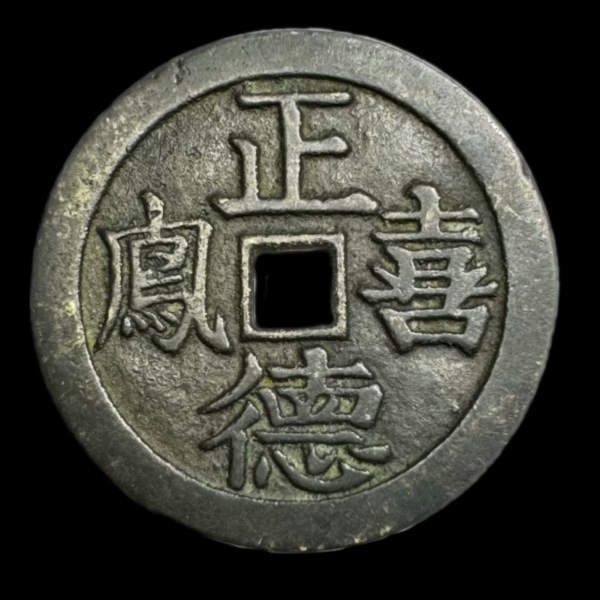
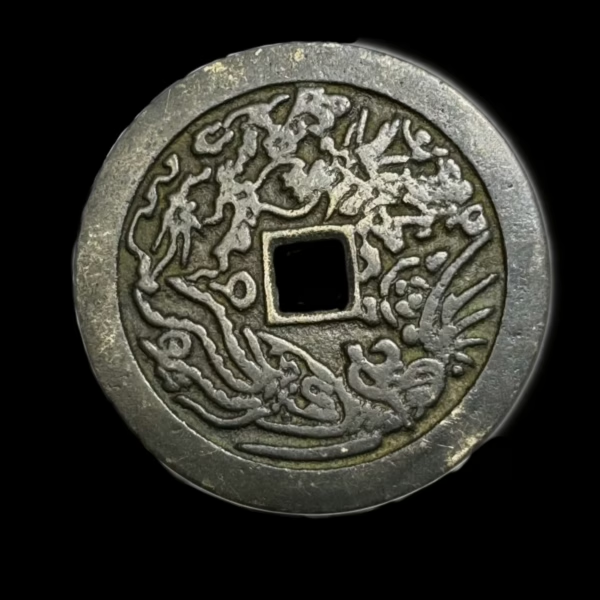
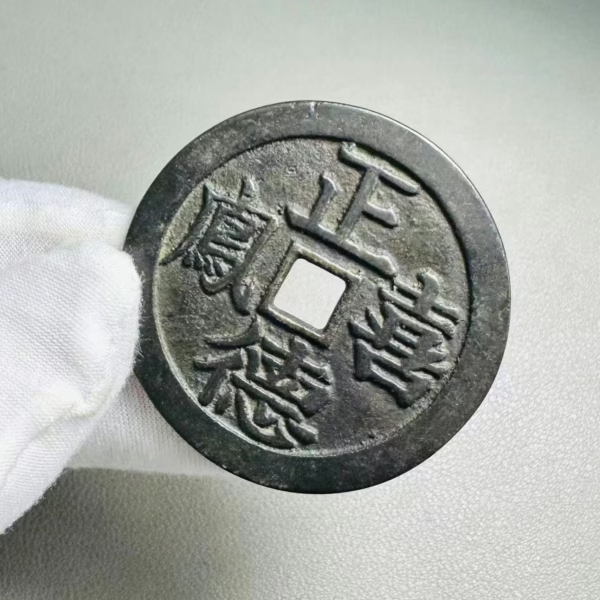
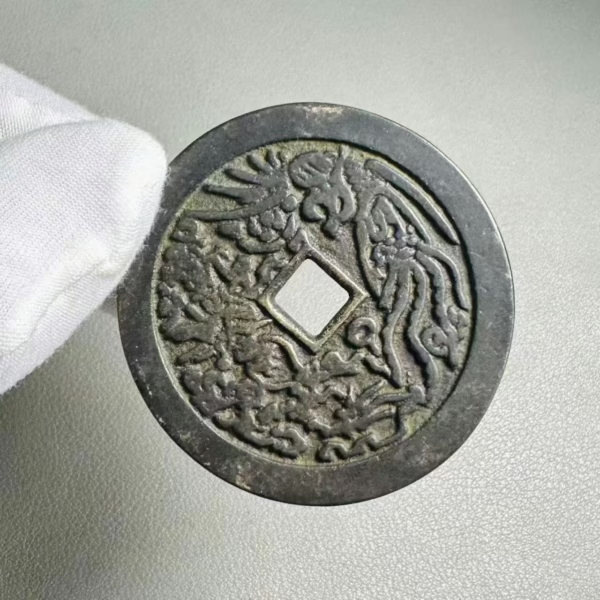
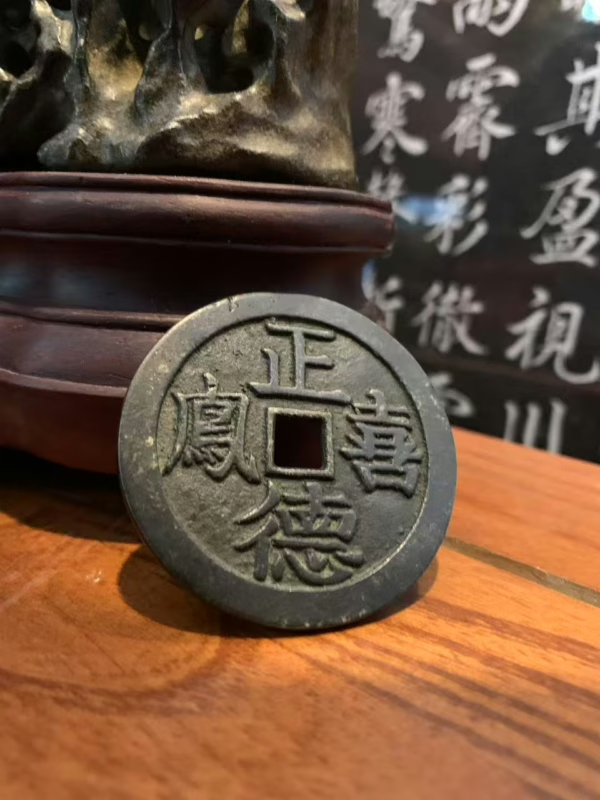
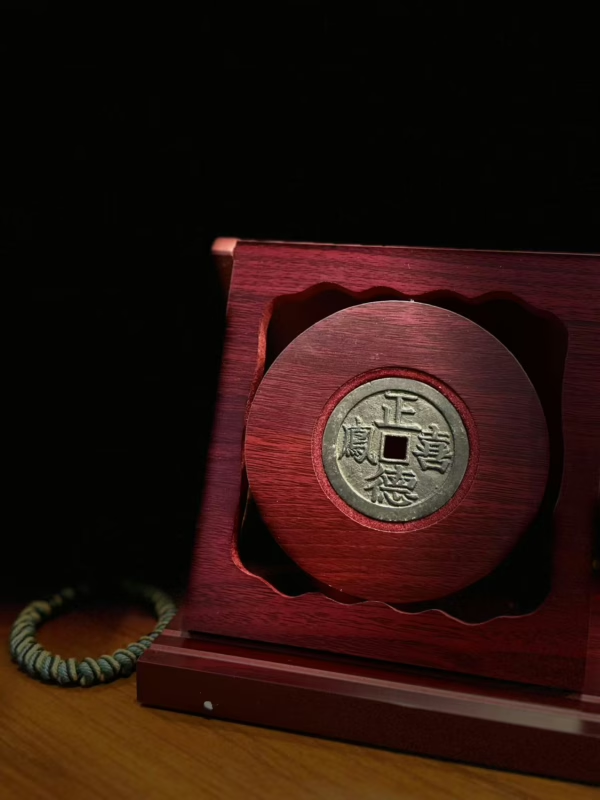
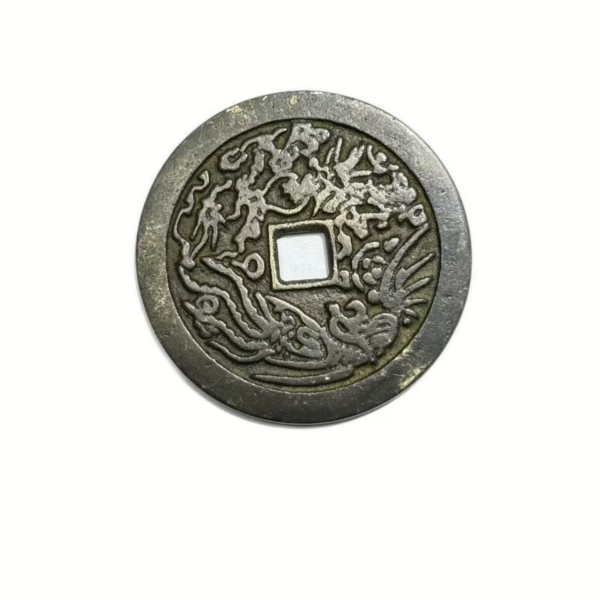
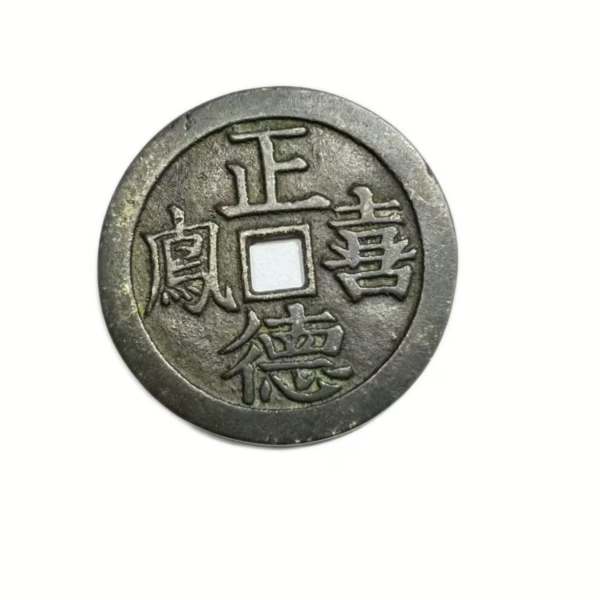
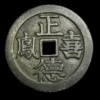
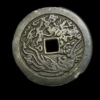
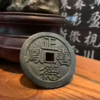
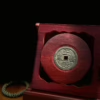
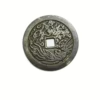
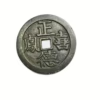
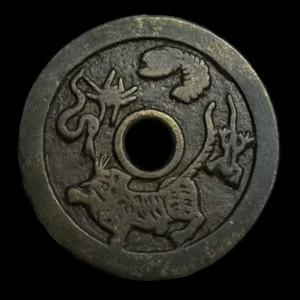
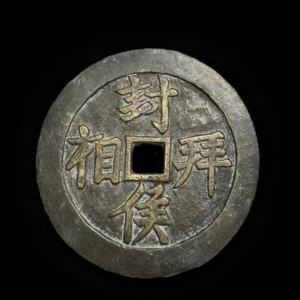
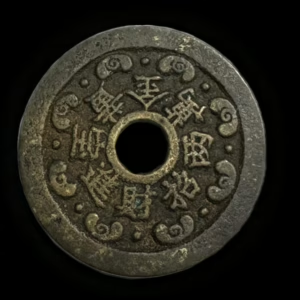
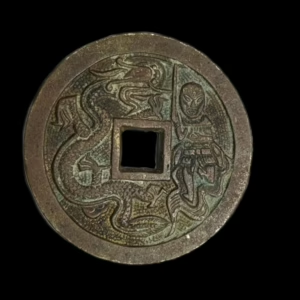
This is a Chinese amulet coin with the themes of “Zhengde’s Admiration for the Phoenix” and “Harmony between the Dragon and the Phoenix”. “Zhengde’s Admiration for the Phoenix” is the side with characters, representing a Chinese folk legend; “Harmony between the Dragon and the Phoenix” is the side with patterns, engraved with two mythical creatures, the dragon and the phoenix. They are also totems symbolizing Chinese culture, representing blessings for harmonious and happy marriages and relationships. This kind of coin is often used to express blessings to others, and can also be used to pursue one’s own love.
“Zhengde’s Admiration for the Phoenix” actually consists of two characters and a verb. Zhengde refers to Zhu Houzhao, Emperor Wuzong of the Ming Dynasty (reigned from 1505 to 1521). With the era name Zhengde, he is one of the most controversial emperors in the Ming Dynasty. He ascended the throne at the age of 15 and is known for his unruly behavior, such as building the “Leopard House” for indulgence in pleasure, self-appointing as the “Mighty General” and leading the army to conquer Mongolia, and even promulgating a ban on pigs. He is evaluated in historical records as “indulging in pleasure and frolic, being close to petty people”. “Xi” means liking. “Feng” refers to a woman, specifically a certain person. The allusion of “admiring the phoenix” originates from the opera “The Emperor and the Beauty”. It tells the story of Zhengde traveling incognito to Datong, accidentally meeting Li Fengjie, a woman in a restaurant. Coveting her beauty, he used his imperial status to coerce and entice her, and finally forcefully took her. According to the Qing Dynasty notes “Kechuang Xianhua”, Li Fengjie was later taken to the Leopard House and died on the way back to the capital following the emperor. The legend of “Zhengde seeking Jiajing because he has no son” has been derived among the people. Although there is no such person as Li Fengjie in official history, its prototype may be Consort Liu Liang, a favored concubine. Zhu Houzhao once took her on a southern expedition and wrote “Lady Liu” on the flag to show his special favor. Therefore, “Zhengde’s Admiration for the Phoenix” often implies a harmonious emotional life.
The dragon is a totem of Chinese culture and the most noble mythical beast in China. In “The Book of Changes”, it is described as “capable of being hidden and being visible, capable of being small and being huge”, representing masculinity, imperial power, and the power to connect with the heavens, in charge of abundant wind and rain, symbolizing male dignity and career success; the phoenix is the king of birds. In “Shuowen Jiezi”, it is explained as “possessing all five colors, and when it appears, the world will be peaceful”, belonging to the gentle and feminine spirit, symbolizing nobility, virtuous governance, and family harmony, often used to metaphorize the virtuousness of women and the prosperity of the family. In the pattern, the dragon and the phoenix spread their wings facing each other, with their tail feathers intertwined, echoing each other. The dragon represents gentle and peaceful femininity, and the phoenix represents masculine dignity. The combination of the two not only implies the harmonious relationship between husband and wife and the prosperity of the family, but also symbolizes the harmony between yin and yang in the world and the peaceful governance by the emperor and his ministers. This pattern is commonly found on wedding items and imperial buildings, carrying the Chinese people’s ideal sustenance for harmony and perfection.
The pattern of the combination of the dragon and the phoenix was first seen on bronzes of the Shang and Zhou dynasties and became a core element of wedding auspicious items in the Ming and Qing dynasties. These coins can be worn to pray for a happy marriage, and can also be hung on the beams of buildings or used to suppress evil in shops when they open. They not only embody the individual’s expectation of “hoping sons to become dragons and daughters to become phoenixes”, but also carry the collective vision of the society for “the dragon and the phoenix bringing good luck, and the country being prosperous and the people being at peace”. The details of the dragon chasing the flaming pearl and the phoenix perching on the peony in its design perfectly unify worldly pursuits such as power, wealth, and descendants with the auspiciousness of heaven and earth, becoming a comprehensive symbol of Chinese auspicious culture.
Reviews
There are no reviews yet.